When fire strips a hillside to bare dirt, the recovery that follows can take years or decades and the order you do things in decides that time line. Here’s what actually happens to a burn scar, and why the first thing to restore is the thing nobody can see.
Key Takeaways:
- Fire can turn soil hydrophobic by creating waxy compounds that repel water, so rain runs off instead of soaking in.
- Hydrophobic soils can persist for roughly 1–6 years depending on climate, soil type, fire severity, and vegetation.
- Some burned landscapes shift permanently into invasive grass systems (“type conversion”), which increase fire frequency and significantly raise landslide risk
- A major restoration mistake is planting trees/shrubs too early into barren, biologically dead soil.
- The most effective recovery sequence is: first stabilize slopes, then rebuild the living soil surface.
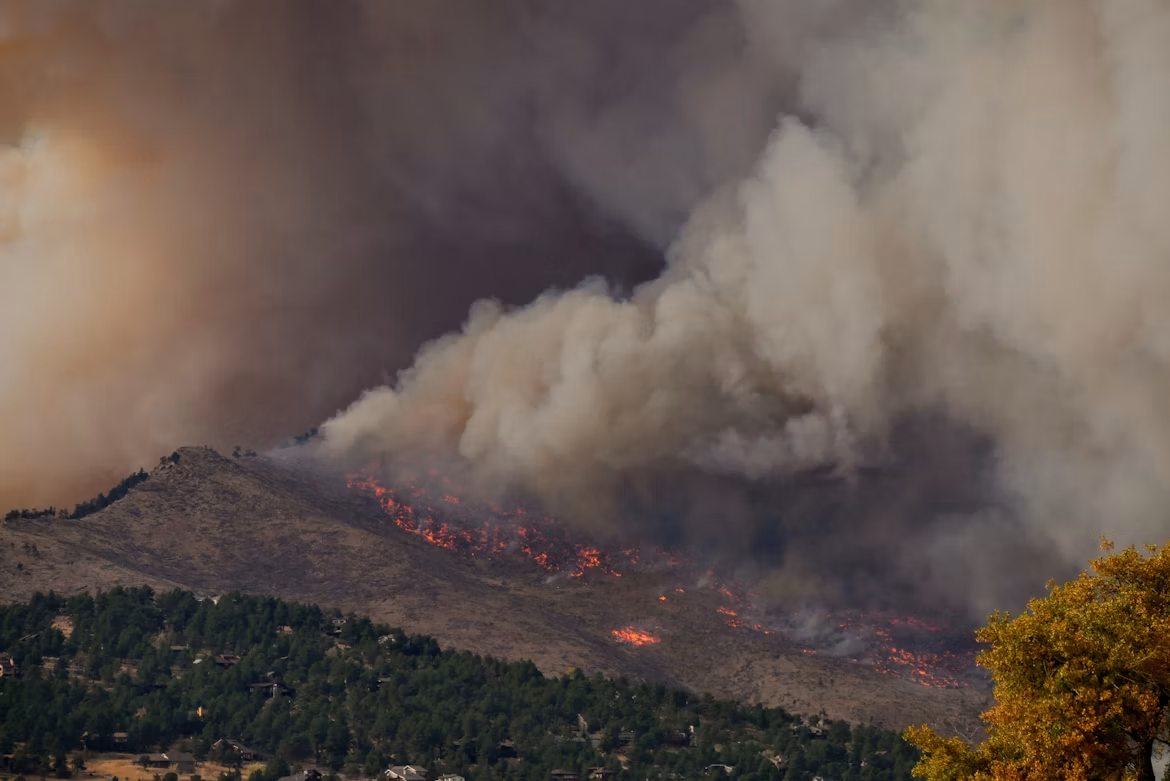
Standing on top of a burned slope, you’re looking at something that behaves less like soil and more like a parking lot. The plants are gone, the surface is bare and gray, and when the first rain comes, most of it doesn’t soak in, it runs off, fast, carrying ash and dirt with it. That runoff is the beginning of the burn scar’s second disaster: erosion, flooding, and in the worst cases, landslides that bury the communities downhill.
Understanding why this happens, and what reverses it, is what we are diving into.
Why burned ground repels water
Healthy soil drinks rain. Burned soil often repels it.
Intense fire (like the flames of the Palisades fire) vaporizes the waxy organic compounds in plant litter and topsoil, and as those vapors move down into the cooler soil below, they condense into a water-repellent layer, sometimes right at the surface. Soil scientists call this water repellency or hydrophobicity, and it’s one of the best-documented consequences of severe wildfire. The U.S. Geological Survey describes how this combination of lost vegetation, ash, and water-repellent soil transforms a watershed’s behavior: rain that would normally infiltrate instead runs across the surface, gathering speed and sediment as it goes (USGS, Postfire Debris-Flow Hazards).
Term Growth
Hydrophobic: A hydrophobic substance is one that resists contact with water and does not dissolve or mix well in it. This happens because its molecules are not attracted to water molecules. Common hydrophobic materials include oils, waxes, and many plastics, which tend to separate from water or cause it to form droplets on their surfaces.
Watershed: A watershed is a region of land in which rain, snowmelt, and other water all flow downhill into a common outlet, such as a stream, river, lake, or ocean. Watersheds include the land, waterways, and ecosystems that influence water quality and movement, making them important for managing water resources and protecting the environment.
The result is a grim feedback loop. Bare, repellent soil produces fast runoff. Fast runoff strips more soil. The stripped slope has even less capacity to absorb the next storm. This is why the danger window after a fire — typically the first one to three rainy seasons — is so acute, and why post-fire debris flows can be triggered by rainfall that the same hillside would have absorbed off before it burned.
The natural healing process
The USGS conducted a study on water repellent soils and found that soil can remain hydrophobic for 1- 6 years after a high intensity fire (see page 18). There are a few factors that influence this range
- Climate and precipitation. More frequent wetting-drying cycles accelerate breakdown. In arid and Mediterranean systems with fewer rain events, repellency persists longer.
- Soil texture. Coarse, sandy soils develop stronger and more persistent repellency than fine-textured clays, where it dissipates faster.
- Fire severity. Higher severity produces a thicker, deeper repellent band that takes longer to clear.
- Vegetation type. Some species (chaparral shrubs, eucalyptus, certain pines) produce especially hydrophobic compounds, extending persistence.
It’s important to note that event though the soil may take 1-6 years to recover. This does not include the time needed for the native plants, shrubs and trees to grow back.
Environmental recovery or environmental conversion?
Not every burn scar heals back into what it was. Many, especially in California’s chaparral and coastal sage scrub, take a different path called type conversion, where native shrubland is gradually replaced by invasive annual grasses.
Invasive grasses like wild oat and mustard colonize bare post-fire soil fast, before native shrubs can re-establish. They set seed, die back, and leave a carpet of fine, flammable fuel that dries out early and carries fire easily. More frequent fire favors the grasses over the slower-growing shrubs, and each cycle pushes the landscape further from its native state. Once it tips fully into grassland, it tends to stay there.
This isn’t only an ecological loss — it’s a safety one. Research from the San Dimas Experimental Forest found that on grass-converted slopes, landslides occurred on roughly 18% of the land during a major storm, compared with under 1% on mature chaparral, because deep woody chaparral roots anchor the soil and bedrock in ways shallow grass roots simply can’t (Fire Ecology, Hubbert et al., 2012). Letting a hillside convert to grass doesn’t just change what grows there. It changes whether the hillside stays put.
Common restoration mistakes
Here’s the counterintuitive part. The instinct after a fire is to plant, to get trees and native shrubs back in the ground as fast as possible. But planting into bare, hydrophobic, biologically dead soil is one of the most reliable ways to waste a restoration budget.
The reason is that a functioning landscape isn’t just plants. It’s plants sitting on top of a living soil system, a web of microbes, fungi, and the surface community that holds it all together. Fire erases that system. Drop a seedling onto the bare mineral soil that’s left, and it has no microbial partners to help it find water and nutrients, no stable surface to anchor in, and no protection from the sun or runoff that’s actively carrying the topsoil away. Survival rates are poor, and failures are expensive.
The better approach flips the sequence. Restore the living soil surface first. Then plant.
Restoring the skin before the body
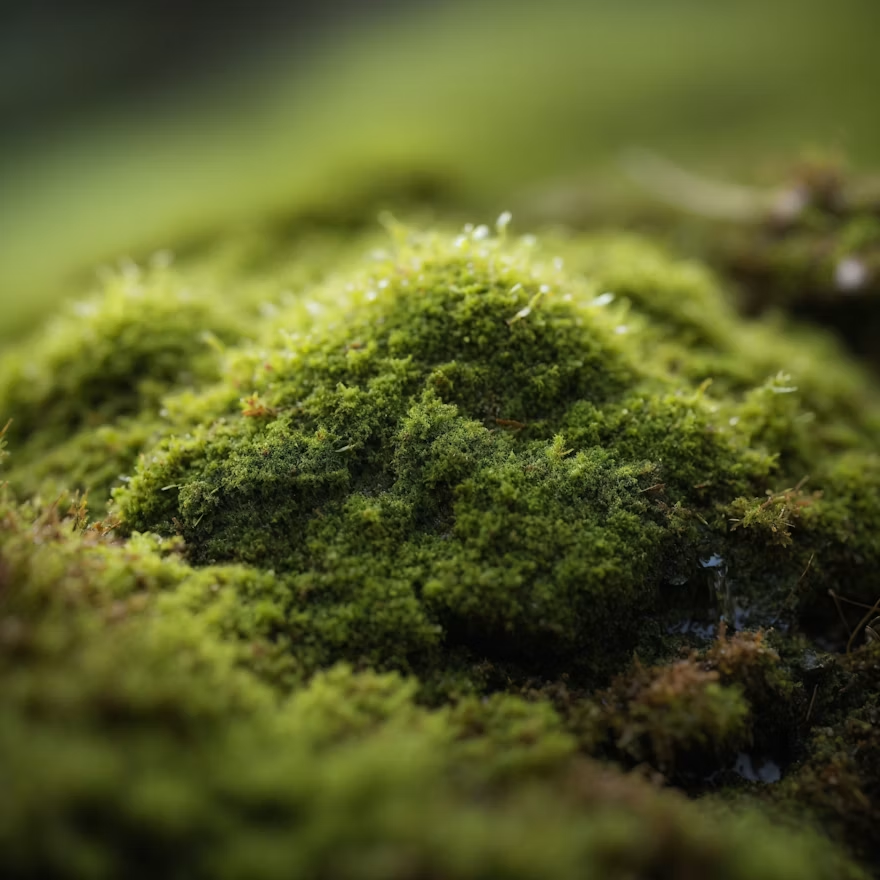
That living soil surface has a name: biological soil crust, or biocrust, the thin community of mosses, cyanobacteria, lichens, and fungi that knits the top few millimeters of soil into a coherent, living layer. (We’ve written a full primer on what biocrusts are and why they matter — see What Is a Biocrust?.)
For a burn scar, biocrust does three things no seedling can do on its own:
It puts water back into the ground. By covering and binding the surface, biocrust slows runoff and dramatically improves infiltration. In a field study on China’s Loess Plateau, moss-dominated biocrust cut surface erosion by up to roughly 94% and substantially increased water infiltration compared with bare soil (Wang et al., 2023, iScience). That study was in farmland, not on a burn scar, but the mechanism, a living surface that absorbs instead of sheds, is exactly what a fire-stripped slope is missing.
It rebuilds the underground network. Biocrust isn’t just a surface bandage. The mosses and their associated fungi begin reconstructing the soil food web, the fungal and microbial connections that move water and nitrogen through the ground that vascular plants depend on. Restore the crust, and you’re not just stabilizing dirt; you’re re-seeding the biological infrastructure that everything planted afterward will rely on.
It’s fast and it’s cheap relative to the alternative. Pioneer mosses, the hardy, weedy first-colonizer species, can begin establishing on bare mineral soil within weeks under the right moisture conditions, far faster than shrubs or trees can take hold. That speed is exactly what you want in the narrow window before the first post-fire storms arrive.
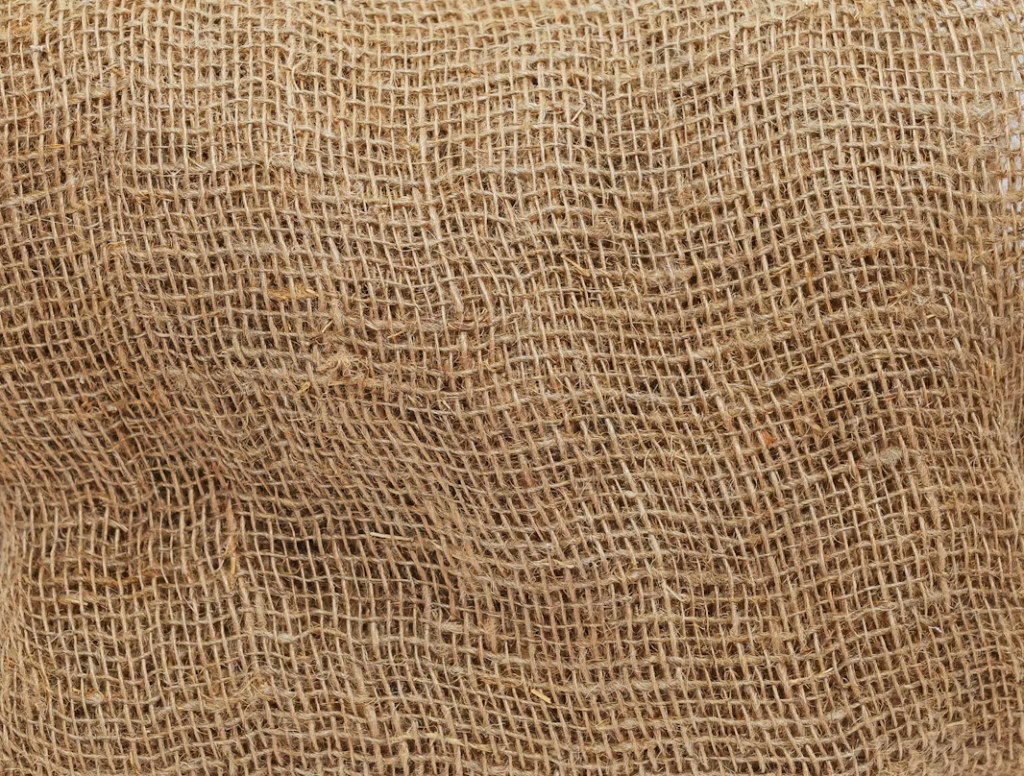
There’s also a well-documented trick that makes crust establishment far more reliable: laying biodegradable jute netting over inoculated soil (as seen in the image).
Across multiple restoration experiments, jute ground cloth increased moss cover several-fold over bare ground — up to roughly five times higher three to four years after inoculation in one U.S. Forest Service study (Slate et al., 2020, Restoration Ecology). The netting holds fragments in place against wind and rain, buffers temperature and moisture, then quietly rots away as the moss takes over.
The right sequence, in order
Put it together and the path a burn scar takes toward real recovery looks like this:
- Stabilize the emergency. In the first weeks, conventional measures, straw wattles, mulch, sandbags, buy time and hold the worst slopes through the first storms. This is triage, not recovery.
- Restore the living surface. Inoculate bare soil with pioneer mosses and biocrust, protected with jute netting where slopes and budgets allow. This rebuilds infiltration and the soil microbial network.
- Add the structure. Once the surface is alive and holding water, introduce native shrubs and pioneer plants onto a surface that can actually keep them alive.
- Grow the canopy. Taller plants and later-successional species go in last, into a system that now has the water, fertility, and biological support to sustain them.
Get the order right and each step multiplies the next.
The takeaway
A burn scar doesn’t heal because we plant a forest on it. It heals because we rebuild, in the right order, the living system that makes a forest possible in the first place, starting with the thin green skin of moss and microbes most people walk right past. You can’t control when the next fire comes, or when the next rain falls on the slopes it leaves behind. But you can control whether that ground is ready to receive it.
Sources & further reading
Government and research sources for the claims in this article. Where a moss or biocrust study is cited, the full reference is given so you can read the original.
Post-fire soil and hazards
- U.S. Geological Survey — Postfire Debris-Flow Hazards. https://www.usgs.gov/programs/landslide-hazards/science/postfire-debris-flow-hazards
- Hubbert, K. R., et al. (2012). Post-fire soil water repellency, hydrologic response, and sediment yield compared between grass-converted and chaparral watersheds. Fire Ecology, 8(2), 143–162. https://fireecology.springeropen.com/articles/10.4996/fireecology.0802143
Moss & biocrust studies cited
- Wang, W., Li, M., Zhou, R., … Xiong, Y.-C. (2023). Moss-dominated biocrust-based biodiversity enhances carbon sequestration via water interception and plant–soil–microbe interactions. iScience, 26(1), 105773. https://doi.org/10.1016/j.isci.2022.105773 (Loess Plateau cropland study — erosion/infiltration mechanism, not California fire data.)
- Slate, M. L., Durham, R. M., & Pearson, D. E. (2020). Strategies for restoring the structure and function of lichen-moss biocrust communities. Restoration Ecology, 28(S2). USFS record: https://research.fs.usda.gov/treesearch/61380 · Full PDF: https://www.fs.usda.gov/rm/pubs_journals/2020/rmrs_2020_slate_m001.pdf
Background on biological soil crusts
- U.S. Geological Survey — Biological Soil Crusts. https://www.usgs.gov/centers/southwest-biological-science-center/science/science-topics/biological-soil-crusts
Leave a Reply